Home textiles · A practical guide
A Closer Look at Society Limonta Blankets: Texture, Weight, and Layering
A blanket is both a small climate and a conspicuous piece of a room. Its texture catches the light; its weight changes the feeling of a sofa or bed; its drape tells you whether it wants to be folded into a precise rectangle or left to fall, rather more convincingly, into disarray.
The word blanket suggests a simple bargain: warmth in exchange for covering oneself. But a blanket also occupies that ambiguous territory between use and display. It may be pulled over the shoulders on a chilly evening, folded at the foot of a bed, or draped across an armchair as if it had arrived there by accident. In each position, its material qualities become part of the room’s visual language. Texture, weight, and drape are not finishing details. They are the story.
That is a useful way to approach Society Limonta blankets, or indeed any blanket whose appeal depends as much on its presence as on its warmth. Rather than beginning with a color swatch or a product name, begin with a few ordinary questions. Does the surface look smooth or irregular? Does the fabric seem to settle heavily, or float at the edges? Will it be used every night, or brought out when the weather turns? The answers help explain why one blanket feels at home in a quiet bedroom and another seems better suited to a living room that is always in use.
Texture is the first impression
Texture is what the eye notices before the hand has made its inspection. A nubby, looped, or loosely woven surface introduces a kind of visual movement, even when the color is restrained. A smoother weave, by contrast, can make a blanket feel composed and almost architectural. Neither quality is inherently more elegant. The question is what kind of company it keeps.
In a room full of smooth planes—painted walls, a tightly made bed, a polished bedside table—a blanket with a more pronounced surface can supply welcome relief. It breaks up the expanse without requiring a loud pattern. On the other hand, a room already rich in grain and detail may benefit from a quieter textile: a surface that offers softness rather than another announcement. There is a certain domestic wisdom in allowing one material to speak plainly while the others listen.
Texture also affects how a blanket reads from a distance. A fine weave may appear nearly solid across the room, then reveal itself at close range. A chunky or raised construction registers immediately, giving a chair or bed more visual weight. If the goal is a calm, layered look, it can help to vary textures without multiplying patterns: pair a subdued blanket with crisp bedding, or let a tactile throw sit beside pillows in simpler fabrics. Contrast creates definition; repetition can make a setting feel overworked.
The hand matters just as much. A blanket that feels agreeable against the skin is more likely to be used, and use is part of its eventual character. Natural creases, slight softening, and the casual fold left behind after an evening on the sofa can lend a textile the ease that no display arrangement quite captures. The ideal surface is not necessarily pristine. It is one that remains inviting after it has entered the routine of a household.
What weight changes
Weight has two meanings in this setting. There is the physical weight of the blanket, which affects warmth and handling, and there is its visual weight, the degree to which it seems to anchor the composition. The two often overlap, but not always. A dense blanket can look visually light if its color is pale and its weave open; a small, dark throw may command attention without being particularly heavy.
A lighter blanket is easy to lift, fold, and move from room to room. It may be useful on a sofa through much of the year, when the purpose is a little warmth rather than full insulation. Its relaxed drape can also suit an informal setting, where a sharp fold would look oddly ceremonial. A heavier blanket, meanwhile, may feel more substantial over the legs or across the end of a bed. It can give a spare arrangement a sense of completion, though a thick layer may feel out of place in a warm climate or a crowded room.
Season is only one part of the calculation. Consider the household’s habits. Is the blanket likely to be carried from the bedroom to the living room? Will it need to be folded away each morning? Is it for a guest bed, where practical warmth matters more than daily styling, or for a favorite chair where it will be reached for repeatedly? A textile that suits the actual rhythm of a home will usually look better there than one selected for an imagined room in which no one ever sits.
It is helpful to think of weight as a dial, not a verdict. In colder months, a substantial layer can add comfort and depth. As the weather softens, a lighter throw may be more useful, offering a hint of warmth without making the bed feel sealed. This seasonal adjustment need not require a complete change of palette. Keeping colors related while altering thickness and texture lets a room shift gently, rather than putting on a new costume twice a year.
Drape: the difference between laid and living
Drape describes what happens when fabric is allowed to fall. A supple blanket follows the contours beneath it, forming soft folds over the corner of a mattress or the arm of a chair. A more structured textile holds its edges and presents a deliberate shape. One is not better than the other; each creates a different mood. Soft drape tends to feel generous and informal. A more stable fall can make a bed appear neatly finished.
The way a blanket is placed can amplify these qualities. Folded lengthwise at the foot of a bed, it creates a clear horizontal line. Draped loosely over one corner, it introduces movement and makes the room feel less arranged. On a sofa, a blanket tucked neatly over the back may look orderly, while one folded over an arm is ready for use. The most convincing placement is often the one that acknowledges the blanket’s purpose. A beautiful textile that seems impossible to touch has been styled into a kind of polite exile.
Drape is also influenced by what lies beneath. A blanket over a crisp, smooth coverlet will show its edges distinctly. Over a softer, rumpled surface, it may merge into a more relaxed arrangement. If a blanket slides or bunches in an inconvenient way, a small change in placement may solve the problem: fold it into a narrower band, lay it across the foot of the bed, or reserve it for a chair with a more supportive shape. A textile’s natural movement should be accommodated, not disciplined beyond recognition.
How to layer a blanket with bedding
Layering works best when each element has a distinct job. Sheets provide the closest contact; a duvet or bedcover supplies the main layer of warmth; a blanket adds a flexible adjustment and a finishing texture. Decorative pillows contribute shape and color, but need not compete with the blanket for attention. When every textile has its own role, the bed feels considered without becoming a catalogue of materials.
- Start with a restrained base. Neutral or softly colored sheets give textured layers room to register. A garment-dyed cotton percale sheet, for example, can provide a relatively crisp counterpoint to a more relaxed blanket.
- Choose one principal contrast. If the blanket has a pronounced weave, keep nearby patterns modest. If the blanket is plain and smooth, a striped pillow or a tactile cover can provide interest.
- Use scale deliberately. A broad fold at the foot of the bed reads as a strong band; a loose corner drape feels more casual. The size of the blanket and the proportions of the bed should guide the choice.
- Leave room for the bed to breathe. Several layers can add depth, but too many can obscure the textiles themselves. A clear view of the sheet, cover, and blanket makes their differences easier to appreciate.
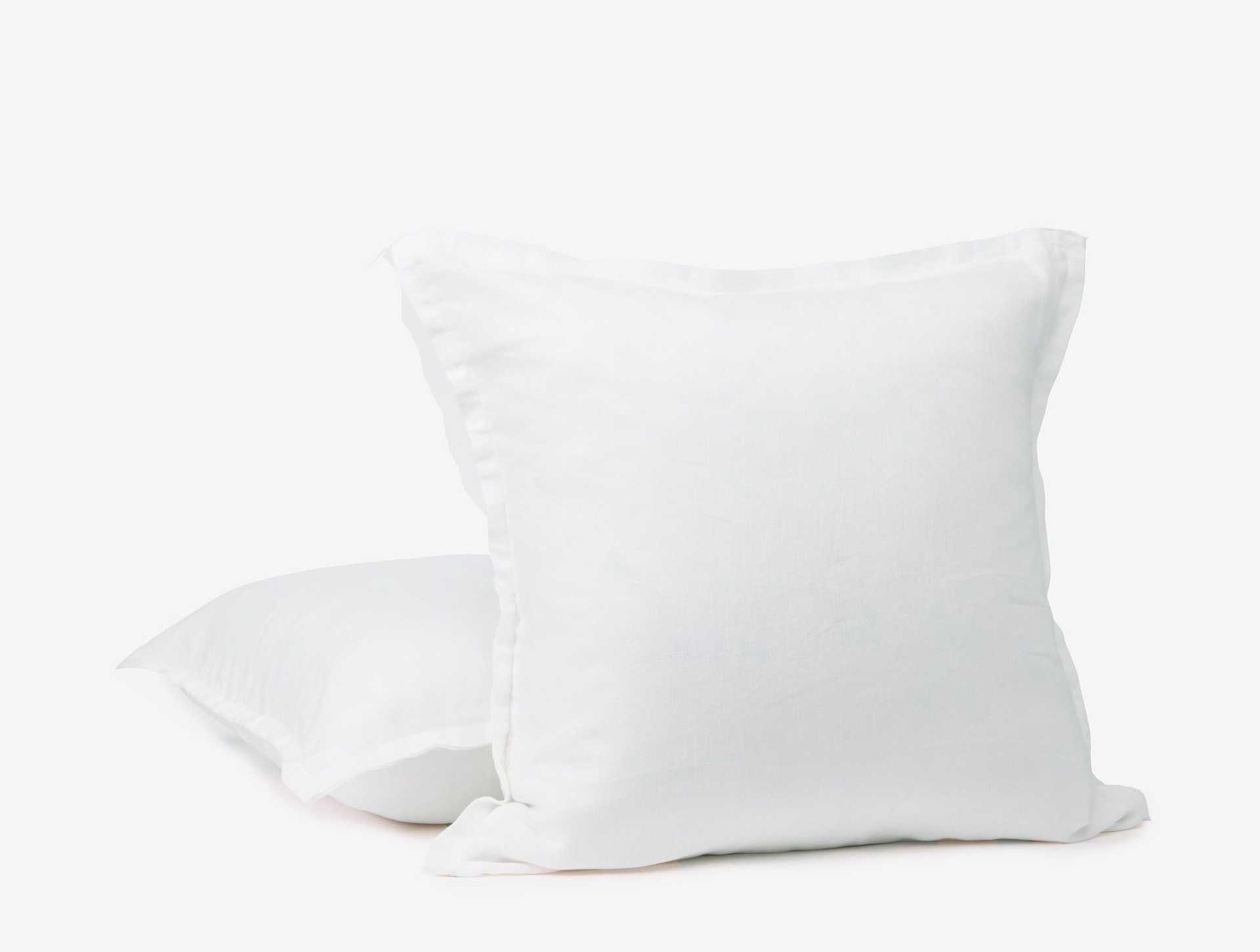
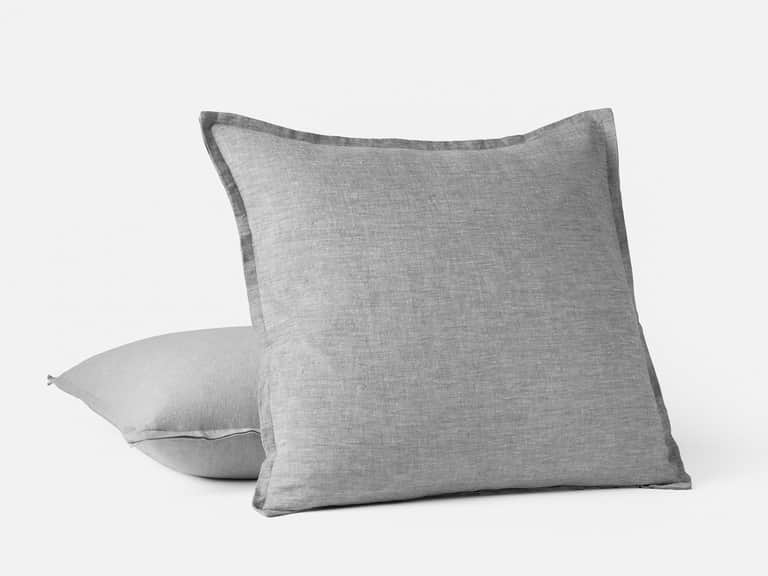
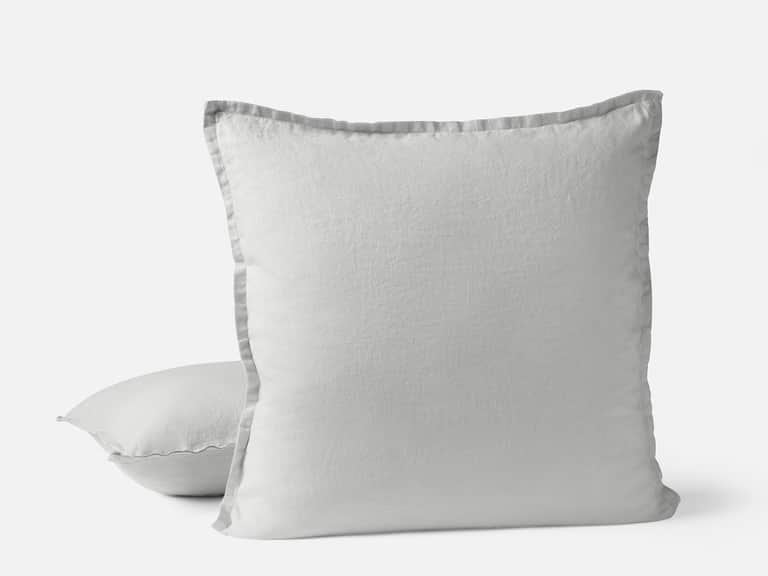
Pillows can help establish a transition between the bed’s larger surfaces. A linen cover, with its naturally relaxed hand, offers a useful textural bridge between crisp cotton and a blanket with more body. For instance, an Organic Relaxed Linen Decorative Pillow Cover is made from organic linen with a washed finish that becomes more supple with washing. It is a pillow cover rather than a blanket, but that is precisely why it can be useful in a layered arrangement: it adds a related natural texture without repeating the same form. The insert is sold separately, and care instructions call for a cold, gentle wash.
Color can make the layers feel related even when the materials differ. Cream, stone, soft gray, and muted green often work well together because they allow small changes in weave and finish to become visible. A contrast need not be dramatic to be effective. A warmer blanket over cool-toned bedding, or a pale pillow against a darker cover, can give the arrangement its point of focus without turning the room into a color exercise.
Living-room layering and everyday use
A blanket in the living room has a different assignment. It shares space with upholstery, rugs, and the objects that gather around a sofa. There, scale and convenience become especially important. A blanket that is too small may look like an afterthought; one that is unwieldy may be perpetually moved from one surface to another. A practical throw should be easy to reach, easy to fold, and pleasant enough to remain in sight.
Look at the sofa before choosing a placement. If its upholstery is smooth and uniform, a more textured blanket can keep the seating area from feeling flat. If the sofa has a strong weave or a patterned fabric, a quieter blanket may settle the composition. Draping a throw over one arm lends a welcoming note; folding it across the seat can make a more deliberate block of color. A basket nearby may be useful when the textile is meant to be used often, though a simple fold can be equally practical.
The presence of a blanket should not make a room feel untouchable. This is where the small irregularities of daily life become relevant: a corner slipping toward the floor, a fold softened by use, a pillow nudged out of line. Those signs are not a failure of styling. They tell us the room is for living. A blanket chosen only for how it looks when untouched may disappoint; one selected for its feel and ease is more likely to earn its place.
Care, longevity, and the changing hand
Care begins with the fabric label, not a general rule about blankets. Fibers and finishes respond differently to washing, heat, and drying. Follow the maker’s instructions, use a detergent suited to the material, and avoid packing the washing machine so tightly that the textile cannot move freely. If a blanket is too large for a home machine, professional cleaning may be the sensible choice. For smaller textiles, prompt attention to care can help preserve both the surface and the way the fabric hangs.
It is worth distinguishing between a fabric’s changing hand and damage. Some textiles soften with repeated use or washing; others are designed to keep a more defined structure. A gradual change may be part of their appeal, while excessive heat, rough handling, or unsuitable cleaning can distort the weave or alter the finish. Store blankets clean and fully dry, with enough space to avoid deep creases. If they are put away seasonally, a breathable storage place is preferable to a damp or tightly compressed one.
Longevity is not merely a matter of preserving an untouched appearance. It is also the result of choosing the right blanket for the way a home works. A delicate decorative layer may not belong on the chair where a pet sleeps every afternoon. A heavy throw may be more useful in a drafty room than folded away in a warm one. When practical use and material character are in agreement, the blanket has a better chance of becoming a familiar part of the household rather than an object that must be protected from it.
A few questions to ask before choosing
For a final check, consider the blanket as both an object and a habit. The right choice is not necessarily the heaviest, softest, or most conspicuous option. It is the one whose qualities suit the place it will occupy and the way people will use it.
- Where will it live? A bed, sofa, guest room, and reading chair each call for a different balance of size, warmth, and ease.
- What should it add? Decide whether the room needs warmth, visual texture, color, or a clearer sense of finish.
- How should it fall? Think about whether you prefer a loose, soft drape or a more defined fold.
- Will it be used frequently? Consider care requirements and whether the blanket is comfortable to handle and maintain.
- What is already in the room? A successful layer relates to existing bedding and upholstery without matching every surface exactly.
The quiet work of a good blanket
A well-chosen blanket rarely needs to dominate a room. Its influence is subtler: a little additional warmth, a softened edge, a new note of texture against familiar bedding. With Society Limonta blankets, the same questions of texture, weight, and drape offer a useful framework for thinking about what a textile contributes, whether it is folded across a bed or left within reach on a sofa.
Begin with the room’s existing materials, then consider the sensations you want to bring in. A light blanket can make a layer feel nimble; a heavier one can lend steadiness. An irregular surface adds depth; a smooth one can restore calm. Let the drape decide whether the textile should be folded neatly or allowed to fall. The result need not look untouched. In fact, the most persuasive arrangement is often one that appears ready to be used—which is, after all, what a blanket is for.