Bath · Linen guide
How to Choose Linen Bath Towels: Weave, Absorbency, and Care
A towel is an unassuming piece of equipment, until it is asked to perform in a hurry. Linen brings a different temperament to the task: lighter in the hand than plush cotton terry, distinctly textured, and often quick to dry between uses. The right choice depends less on romance than on how you bathe, how you do laundry, and what you expect a towel to feel like.
There is a moment after a shower when a towel becomes the most important textile in the house. It must be close at hand, willing to absorb, and neither so heavy nor so clammy that it seems to have acquired an agenda of its own. Linen bath towels enter this small domestic drama with a notably different presence from the thick, velvety cotton towels that dominate many bathrooms. They are usually lighter and more textured. They may feel crisp at first, then grow more pliable with use. And, depending on how they are woven and finished, they can dry with a briskness that is welcome in a crowded bathroom or a humid climate.
Those qualities are appealing, but they do not make every linen towel right for every person. A towel’s performance rests on several things at once: its fiber, the structure of its weave, its weight, its finishing, and the habits of the household that uses it. The word “linen” is a beginning, not a complete specification. Before choosing, it helps to think about what happens between the bath and the next wash: how much moisture the towel must take up, whether a textured surface feels pleasant against the skin, and how much time it has to dry.
What makes linen feel different?
Linen is made from flax fibers. Compared with many familiar cotton towels, linen textiles tend to have a more pronounced surface character: a subtle irregularity in the yarn, a dry or crisp sensation when new, and a relaxed hand that develops through washing and use. “Dry” here describes the feel of the fabric, not an inability to absorb water. A linen towel can take up moisture while still feeling less plush and enveloping than a thick cotton terry towel.
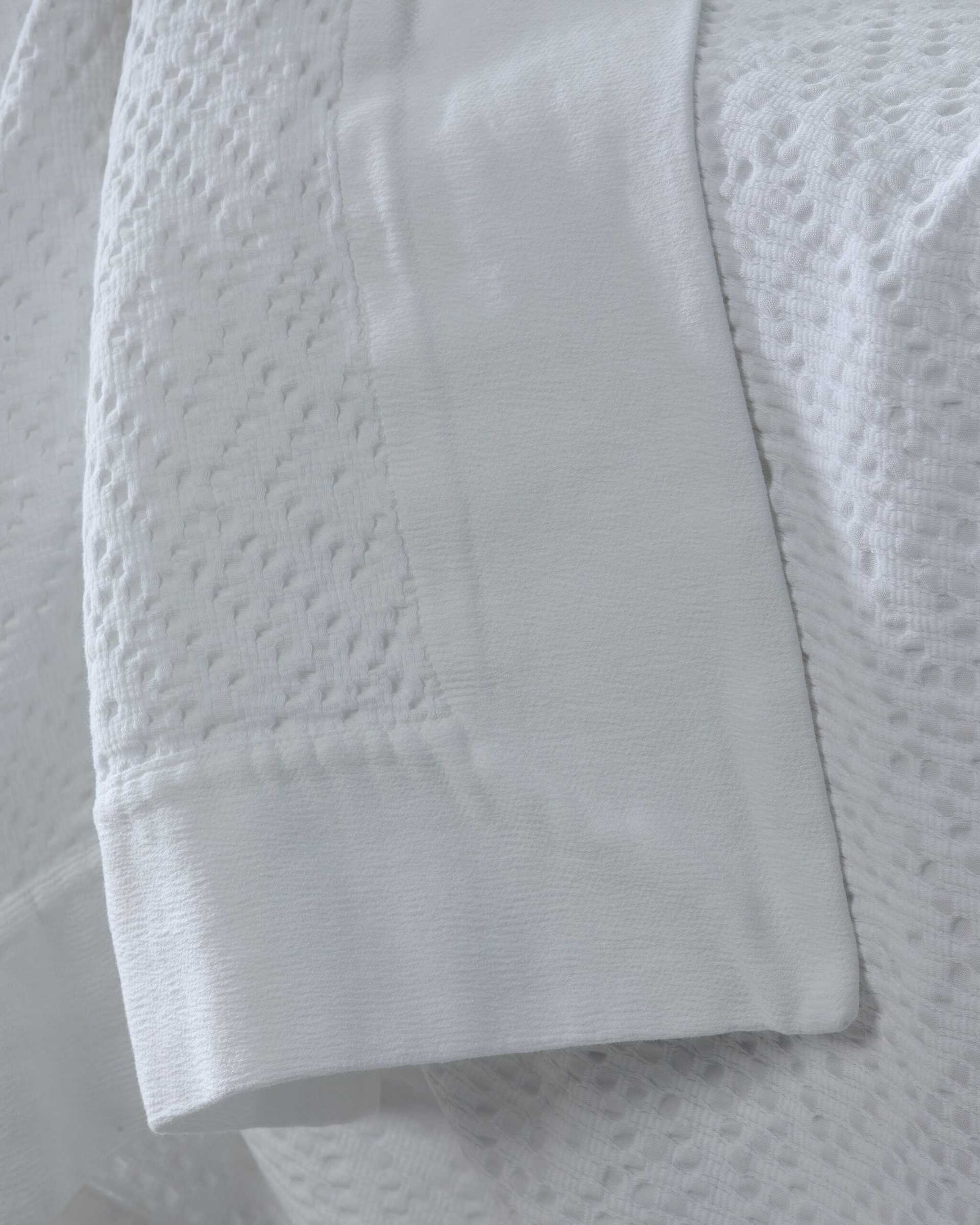
The distinction is partly structural. Cotton terry is built with loops that create a deep, soft pile. Those loops offer a familiar, cushioned contact and a generous surface for drying. A flat-woven linen towel has a closer, more cloth-like feel. Waffle linen occupies another point on the spectrum: its raised grid of ridges and recessed squares creates texture and depth without necessarily producing the thick pile of terry. The hand is less like sinking into a cloud than running a palm over a small, orderly landscape.
Personal preference matters. Some people like a towel that pats and cushions; others prefer a lighter cloth that can be wrapped, folded, and hung without taking over the bathroom. Linen may suit the latter especially well. Its texture can also provide a gentle, invigorating sensation, though no towel should be treated as a substitute for a scrub cloth if a more vigorous exfoliating effect is wanted. Skin sensitivity is individual, and the best test is practical: use a clean towel gently and notice whether its surface feels comfortable.
Reading the weave: what a waffle texture can and cannot do
In a linen waffle weave, the fabric is formed into a repeated pattern of raised cells and lower channels. The pockets make the surface more dimensional than a plain, closely woven cloth. That construction can expose more of the fabric to air than a smooth, flat surface, and the folds create places for moisture to spread. It is one reason waffle towels are often valued for their combination of texture, lightness, and practical drying behavior.
Still, the weave is not a magic trick. A waffle pattern does not, by itself, guarantee superior absorbency or faster drying. Results depend on fiber quality, yarn, density, finishing, towel size, and how wet the bathroom is. A very open, lightweight cloth may dry quickly but feel less substantial; a denser towel may feel more reassuring but take longer to air out. Two towels described as “waffle linen” can behave differently once they are in regular use.
Look for a construction that feels balanced rather than simply impressive on a product description. The fabric should have enough body to handle repeated use without seeming flimsy, while still being manageable to wash and hang. Raised cells should feel distinct but not so loose that the towel seems vulnerable to snagging. If you can inspect the towel in person, gently stretch a section and examine how the structure recovers. If you are choosing remotely, look for clear information about fiber content, weave, dimensions, weight, and care rather than relying on adjectives alone.
Absorbency is a habit as much as a feature
When people compare towels, “absorbency” can sound like a single measurable virtue, as though one cloth simply wins and the others concede. In daily life, it is more complicated. A towel has to take up moisture, move it through the fabric, and then release it as it dries. The experience also depends on how a person uses it. Patting, rubbing, and wrapping place different demands on a towel, and a towel that works beautifully for one person may seem too thin or too textured to another.
Linen can absorb moisture effectively, but its lighter, less plush feel can make the sensation unfamiliar if you are accustomed to thick cotton terry. A linen towel may not seem to “drink up” water in the same enveloping way. Instead, it offers a more direct contact with the skin and a fabric that is often easier to handle when wet. Waffle construction adds texture and surface variation, but the towel’s overall weight and density remain important clues to how substantial it will feel.
There is also a difference between initial impression and performance after washing. A new towel may feel stiff, especially if it has been tightly folded or treated with a finish. Washing can help relax the fibers and remove residues from manufacturing, allowing the fabric to settle into its everyday character. Avoid judging a towel entirely by its first encounter. Follow its care label, wash it appropriately, and give it a few uses before deciding whether the feel suits you.
For a household, the useful question is not “Which fiber absorbs the most?” but “What kind of drying experience do we want, and how will the towel fit our routine?” A compact linen towel may be convenient for a small bathroom, travel, or a warm climate. Someone who prefers a thick, plush wrap may be happier with cotton terry. Neither preference is a failure of textile discernment. A bathroom is not a laboratory; comfort is part of the evidence.
Choose for the room you actually have
Before selecting a towel, consider where it will live. In a well-ventilated bathroom with room to spread a towel out, many fabrics will dry more readily. In a small room where towels hang close together, or in a humid space with limited airflow, a lighter towel that can be opened fully may be especially practical. The way a towel is hung is not incidental: a towel folded over a narrow rail dries differently from one spread across a broad bar.
Size is worth considering, too. A bath sheet offers more coverage, but it also occupies more space on the rail and in the washing machine. A smaller bath towel is easier to handle and may dry sooner simply because there is less fabric to manage. Think about whether you want a towel for a full wrap, a quick dry, or a combination of uses. If there are several people at home, a consistent set of sizes can simplify storage and laundry, while different sizes can make sense when household routines vary.
Weight can guide your expectations, although a number on its own cannot settle the question. A heavier cloth often feels more substantial, but it may take longer to dry and require more space in a load. A lighter one can be easier to wash and hang, yet may feel spare to someone who wants a thick, cushioned towel. If a manufacturer lists a fabric weight, use it as a comparison point among similar towels, not as a universal score for quality.
A practical linen towel care routine
Good care begins with the instructions supplied for the particular towel. Linen textiles vary in weave, dye, finish, and construction, so one temperature or drying method cannot be prescribed for every piece. As a general rule, wash linen towels with like colors, use a mild detergent, and avoid overloading the machine. A crowded wash can prevent textiles from moving freely and rinsing thoroughly. It can also leave towels more tangled and creased than necessary.
- Shake the towel out before washing. This helps it open up and makes it less likely to enter the machine folded into a dense bundle.
- Choose a gentle, suitable wash. Follow the care label, use detergent in a measured amount, and avoid chlorine bleach unless the instructions specifically permit it.
- Do not rely on fabric softener. Softener can leave a coating on fibers, which may affect how a towel takes up water. If absorbency matters, skip it or follow the manufacturer’s advice.
- Dry with some restraint. Line drying is a straightforward option when practical. If using a dryer, follow the label and avoid excessive heat or prolonged drying.
- Allow air to circulate between uses. Hang the towel open rather than leaving it bunched on a hook or in a damp heap.
“Avoid overdrying” is especially useful advice. A towel left in a hot dryer long after it has become dry gains little from the additional tumbling. Excessive heat and time can be hard on textiles, and the result may feel rougher than necessary. Remove the towel when dry according to its care instructions. If you prefer a smoother surface, a light iron with steam may be appropriate for some linen, though bath towels generally do not require a polished finish. The object is a useful cloth, not a table setting awaiting inspection.
New linen may shed a little lint or feel more structured than expected. That is not automatically a defect. Wash it separately or with similar colors if the care label recommends it, and avoid combining it with items that produce heavy lint. Do not cut or pull loose threads; trim a stray thread carefully if needed. With regular, considerate laundering, linen often softens over time, but it will retain more of its characteristic texture than a brushed or high-pile towel.
Questions to ask before buying
A short checklist can make the choice less abstract. First, confirm that the towel is made from linen rather than a linen blend if pure linen is important to you. A blend may have different handling and care characteristics, and the label should say what fibers are present. Next, check the dimensions: “bath towel” is not a universal size. Then look for the weave, weight if available, and precise washing and drying instructions.
Consider whether the towel is intended for everyday bathing, guest use, the gym, or travel. A lightweight towel that dries readily may be a good companion for frequent packing, while a larger towel may be more comfortable at home. Think about the surface, too. If possible, feel a waffle weave and a flat linen cloth side by side. The difference is easier to understand in the hand than in a paragraph of product copy.
Finally, be wary of making grand assumptions from a single word. “Natural,” “breathable,” and “quick-drying” can be useful descriptions, but none replaces details about construction and care. A towel’s practical life depends on the full chain: fiber, weave, finish, washing, hanging, and the room where it dries. Even the most appealing textile cannot compensate for being left damp in a heap. The ordinary habits matter.
Is linen right for your bathroom?
Linen bath towels make sense for people who value a lighter feel, a more tactile surface, and a fabric that is easy to spread out between uses. Waffle linen offers a particularly distinctive middle ground: more structure and dimensionality than a plain flat weave, without the dense pile associated with terry. For some, that texture becomes part of the pleasure of the routine. For others, it is a reminder that a towel need not be plush to be useful.
If softness means cushion and loft, thick cotton terry may remain the preferred choice. If you want a compact cloth that feels crisp, dries readily when given airflow, and develops a more relaxed hand over time, linen is worth trying. A household can also keep more than one kind of towel: plush cotton for cold mornings, perhaps, and lighter linen for warmer weather or a faster laundry cycle. The bathroom need not submit to a single textile ideology.
The best linen towel is not necessarily the most expensive, the heaviest, or the one with the most elaborate description. It is the one whose weave feels right, whose size suits the room, and whose care requirements fit the life you lead. Choose with those realities in mind, wash it gently, let it dry fully, and give the cloth time to become familiar. In textiles, as in many domestic matters, the first impression is only the beginning of the relationship.

